
|
 |
|
 |
 |
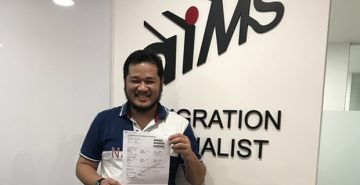
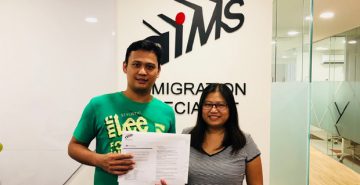
" From the day I hired AIMS, I always felt in safe hands and AIMS expertise in the area of Australian immigration was very helpful indeed. I was pleasantly surprised at how quickly the visa was granted - only 5 months from lodgment of the forms to the grant the 175 Skilled - Independent Visa. "
- Malini Sintre
[read more..]
" Lorem ipsum dolor sit amet, consectetuer adipiscing elit. Aenean commodo ligula eget dolor. Aenean massa. Cum sociis natoque penatibus et magnis dis parturient montes, nascetur ridiculus mus. Donec quam felis, ultricies nec, pellentesque eu, pretium quis, sem. Nulla consequat massa quis enim. Donec pede justo, fringilla vel, aliquet nec."
George
read more...
" Lorem ipsum dolor sit amet, consectetuer adipiscing elit. Aenean commodo ligula eget dolor. Aenean massa. Cum sociis natoque penatibus et magnis dis parturient montes, nascetur ridiculus mus. Donec quam felis, ultricies nec, pellentesque eu, pretium quis, sem. Nulla consequat massa quis enim. Donec pede justo, fringilla vel, aliquet nec."
Sue
read more...
|
|
 |
|
|
|
|
|
|
| |
|
|
LATEST IMMIGRATION NEWS |
|
| |
Singapore
|
| |
|
| |
- No need for changes to dependency ratio: Ministry of Manpower
19 May 2010 – The Government sees "no need" to tweak the current foreign workers dependency ratios as they "strike a balance" between moderating foreign
- Singapore to Emerge As Global Talent Hub
13 May 2010 – The war for talent has taken centre stage in an increasingly global and sophisticated business environment. Countries are rapidly transforming
- Changes To Foreign Worker Levy For Sustainable Growth
23 February 2010 – The Budget Speech 2010 has announced changes to the levy rates and levy tiers for S Pass and Work Permit holders
|
|
No need for changes to dependency ratio: Ministry of Manpower
19 May 2010 –
The Government sees "no need" to tweak the current foreign workers dependency ratios as they "strike a balance" between moderating foreign-worker demand and allowing growth companies room to expand, Manpower Minister Gan Kim Yong told Parliament yesterday.
Member of Parliament for Sembawang GRC Ellen Lee had asked if the Ministry of Manpower (MOM) would adjust the dependency ratio - the number of foreign workers employers can hire for each local worker they have - in light of better economic results in the first quarter.
More employers have been asking for help in hiring more foreign workers at her weekly Meet-the-People sessions, she said. And the renewal of current work permits is also not being allowed, she added.
While Mr Gan reiterated that the current productivity drive was an "urgent one" and companies should take advantage of various schemes to invest in improvements, he acknowledged that some firms may face manpower difficulties.
For instance, they may be losing local workers, which would result in a lower foreign-worker quota - or they may have foreign workers who may not qualify for work permits due to the re-adjustment of work pass criteria.
It is then important, said Mr Gan, to look for better-qualified candidates when applying for work permits.
Companies whose applications for foreign workers have been rejected can approach MOM for clarification.
From July, the foreign-worker levy will gradually be raised to moderate reliance on foreign labour and encourage companies to invest in productivity.
Source: Today Newspaper, http://www.todayonline.com |
| |
|
| |
|
| |
|
|
| |
|
| |
|
| |
Singapore to Emerge As Global Talent Hub
May 13, 2010 -
The war for talent has taken centre stage in an increasingly global and sophisticated business environment. Countries are rapidly transforming themselves into knowledge based economies and are strongly encouraging the cross-border flow of foreign talent and professionals. It is a well known fact that multi national corporations, investors and medium sized firms will set up business operations in countries that assure immediate availability of talented human capital.
Singapore's positive approach to foreign talent is best reflected in its open and liberal immigration policy. Singapore's work visa schemes are designed to attract entrepreneurs and working professionals from all over the world. Furthermore, foreign professionals are encouraged to take up permanent residency under the various Singapore Permanent Resident schemes. Singapore has reaped the benefits of its liberal immigration policy, which has led to increased investment in the local economy and spurred economic growth.
Having set the basics right, Singapore is now looking at building a "vibrant talent ecosystem" and has launched the Leadership Initiative for Building Networks and Knowledge (LINK). By creating a cluster of business schools, human-resource consultancies and corporate universities, LINK aims at transforming Singapore into a regional centre for developing talent and leadership training. Integral to LINK is the newly launched Human Capital Leadership Institute (HCLI) that will engage and collaborate with companies to help them address their pan-Asian leadership development and talent management needs. According to Mr, Gan Kim Yong, Minister of Manpower, "Top local talents will want to remain in Singapore and global talents will want to come here because we have the best educational infrastructures to help them develop their leadership competencies and further their careers. Global companies will also invest and set up operations in Singapore because of the availability of a deep talent pool."
Today, Singapore's reputation as the ideal business and commercial hub in Southeast Asia can be partly attributed to its workforce that is universally recognized for its extensive knowledge, high productivity, technical proficiency, professional expertise and vast experience. Generally, availability of a competent workforce leads to a better business climate and a stronger economy. Developing human capital is an economic imperative for Singapore, which is why it continues to invest heavily in nurturing a strong talent base.
Source: PR Log, http://www.prlog.org/10676993-singapore-to-emerge-as-global-talent-hub.html |
| |
|
| |
|
| |
|
|
| |
|
| |
|
| |
Changes to Foreign Worker Levy for Sustainable Growth
23 February 2010 -
Changes to take effect from July 2010
The Budget Speech 2010 has announced changes to the levy rates and levy tiers for S Pass and Work Permit holders.
2. The changes will be implemented gradually in stages from July 2010 till July 2012 (see Annex A for overview of changes and Annex B for details). The changes, implemented over three years, will provide companies time to adjust and invest in measures to boost productivity.
Key Features of the Changes
3. The key features of the changes are:
i. Increase in the S Pass and Work Permit levy rates. This is to better moderate employers’ demand for foreign manpower and to encourage investment in productivity;
ii. Greater differentiation in levy rates between skilled and unskilled foreign workers. This aims to encourage companies that need foreign workers to employ better skilled and thereby more productive ones;
iii. No change in Dependency Ratios1, but higher dependency will attract higher levy rates. This maintains companies’ access to, while at the same time encourages them to reduce reliance on, foreign manpower.
There will be no changes to the Foreign Domestic Worker levy rates.
4. MOM will also be stepping up monitoring and enforcement against employers who attempt to recover the levy from their foreign workers, whether directly or indirectly. Those who do so will be prosecuted and/or barred from hiring foreign workers.
1A dependency ratio sets the maximum proportion of S Pass or Work Permit holders to local workers that each company can hire.
Source: Ministry of Manpower, http://www.mom.gov.sg |
| |
|
| |
|
| |
 |
|
| |
|
| |
|
| |
|
| |
|
|